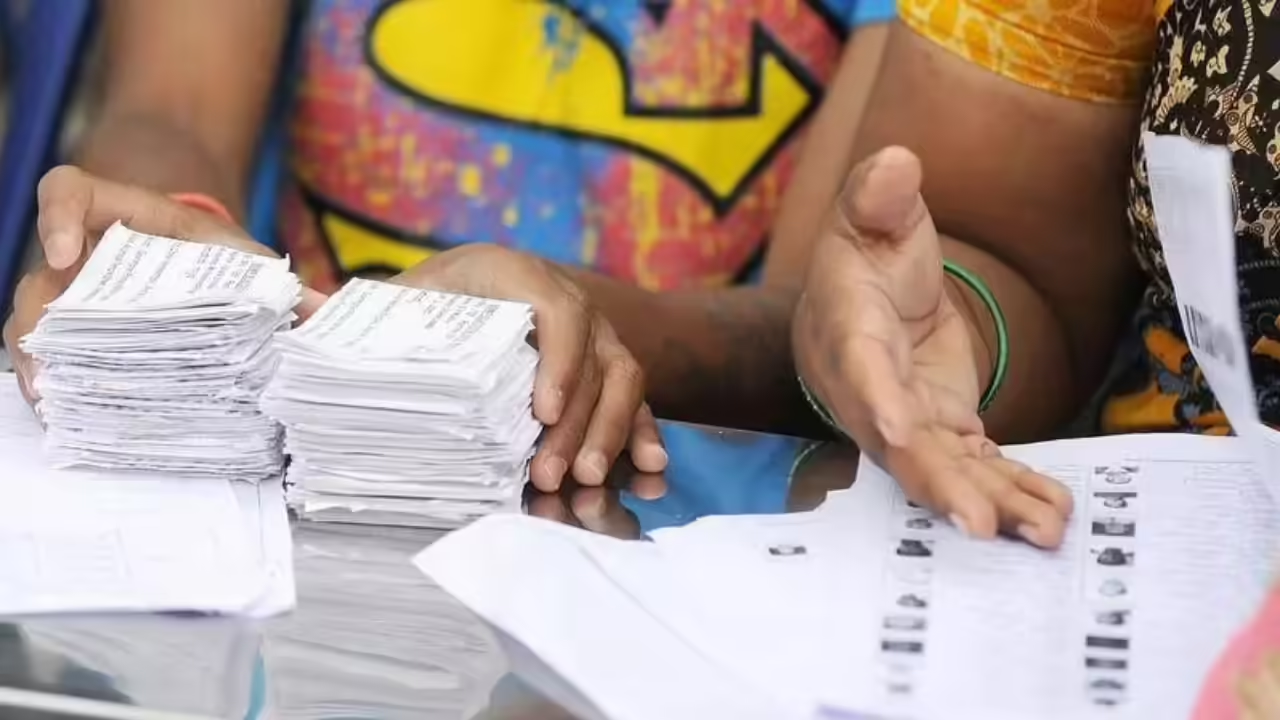
Growing anxiety over possible voter deletions has pushed a group of concerned citizens—working under the banner “Citizens for Democracy”—to appeal to the Chief Electoral Officer (CEO) of Goa for more time to complete the ongoing Special Intensive Revision (SIR) of electoral rolls.
With Zilla Panchayat elections now notified alongside the SIR process, citizens fear that the tight deadlines and procedural hurdles could lead to many legitimate voters being left out. They are requesting that the house-to-house enumeration and form collection period be extended by at least four more weeks.
In a detailed letter submitted to the CEO, the group emphasised that the guiding principle of any voter roll revision should be inclusion, not exclusion. “The fundamental right to vote must not be eroded by procedural burdens that ordinary working families find difficult to fulfil,” the letter—signed by Elvis Gomes and others—stated.
Calls for Better Awareness and Fair Processes
The group urged the CEO to launch a strong and accessible public awareness campaign explaining the consequences of not submitting the enumeration forms. According to them, many citizens are still unaware of the ongoing SIR exercise, which began on November 4 without much publicity.
They also asked for clear instructions ensuring that if a household fails to submit its form, there should be a second, verifiable layer of checks—such as a formal notice, phone call, or SMS—before any name is removed from the draft roll.
At the same time, the citizens stressed the importance of preventing ineligible entries, particularly those related to migrant populations allegedly being added with political assistance. They called for stricter verification to ensure the integrity of the electoral roll.
Complaints About BLO Practices
Several worrying experiences from the public were also shared. According to the group, some Booth Level Officers (BLOs):
- provide only one copy of the enumeration form and take it back immediately,
- refuse to sign an acknowledgment copy,
- send unidentified third parties to collect forms,
- demand documents or photos unnecessarily.
These practices, they said, only add to confusion and mistrust among voters.
Elderly Voters at Particular Risk
The citizens also pointed out that voter details from the SIR 2002 list are missing for many active voters—especially the elderly. They shared the case of an 85-year-old woman whose name does not appear in the 2002 records, even though she has been voting for decades.
“There are many such elderly people, including those living in old-age homes, who need to be covered in the enumeration process,” the letter noted.
Tight Timeline and Incomplete Coverage
The group criticised the short, one-month window for distributing and collecting enumeration forms, arguing that 100% distribution does not guarantee 100% collection. They cited claims of incomplete distribution even in Panaji, with a former councillor reporting that some households had still not received any forms.
The letter was signed by Elvis Gomes, Pradeep Padgaonkar, Prof Janardhan Tamankar, Dipesh Naik, Orlando Fernandes, and Yogesh Nagvenkar—all of whom urged the CEO to intervene before legitimate voters lose their constitutional right.